 Image 1 sur 5
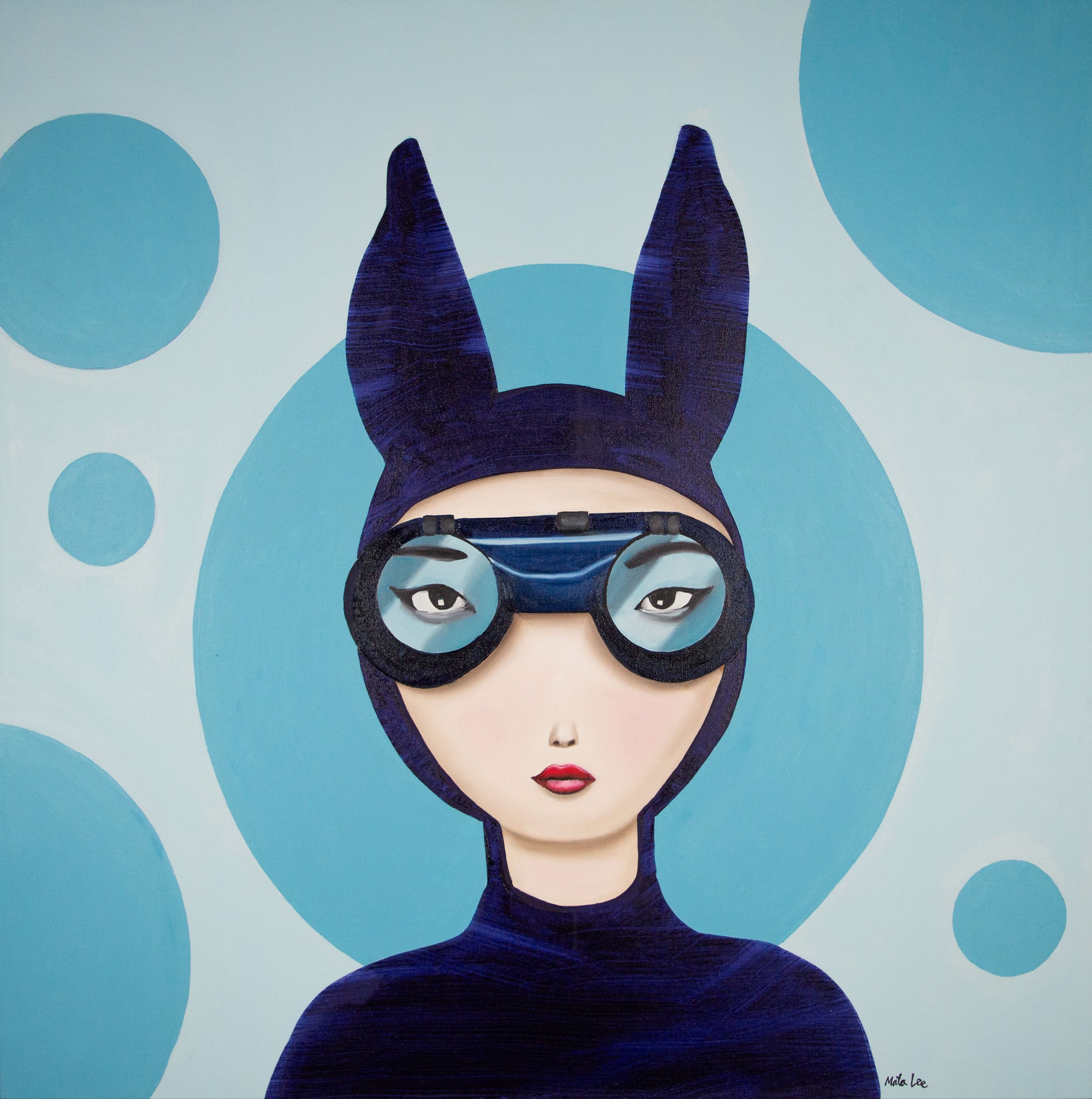 Image 2 sur 5
 Image 3 sur 5
 Image 4 sur 5
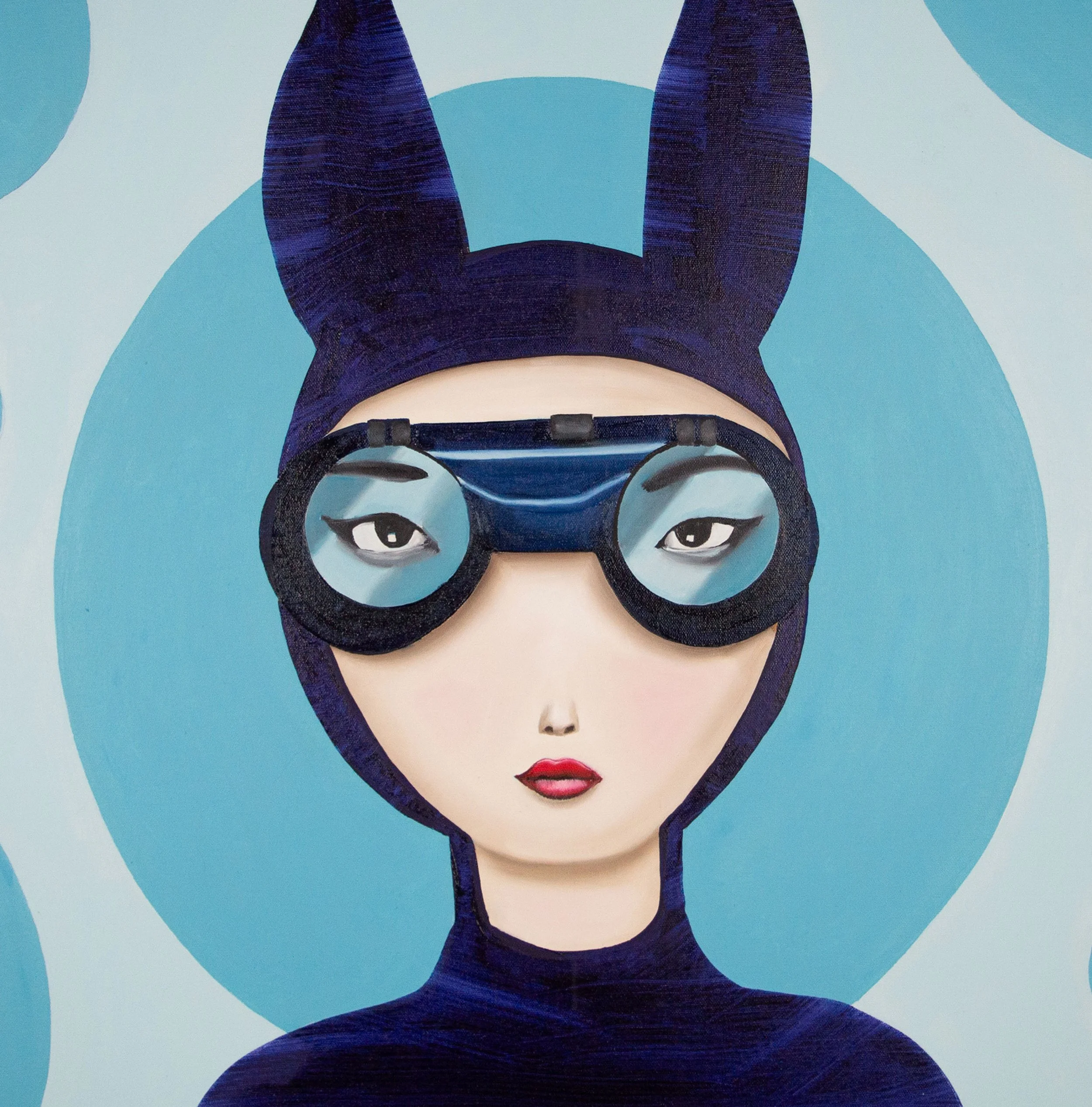 Image 5 sur 5
Vision belongs to Mata Lee’s ongoing exploration of identity construction, perception, and the mediation of the gaze. At the center of the composition, a stylized female face—one of the artist’s recurring signatures—appears partially obscured by an oversized helmet and goggles. These accessories are not merely figurative elements: they become symbolic interfaces between the inner world and the outer one.
The turquoise lenses, disproportionate and almost independent from the face, create an effect of visual dissociation that unsettles the viewer. They evoke at once a protective device, a perceptual filter, and a metaphor for the multiple realities each person inhabits. The fragmented gaze raises the question of what it means to truly see: do we perceive reality, or only the projection of our own experience? Here, the artist articulates a reflection on subjectivity, attention, and the blind spots that shape our emotional and social interpretations.
The chromatic palette—dominated by vibrant turquoise contrasted with the milky calm of the skin—generates a dialogue between emotional intensity and minimalist restraint. This contrast reinforces the tension between exposure and concealment, a central theme in the Muses series. The figure stands upright, immobile, almost iconic: a silent presence that simultaneously absorbs and returns the viewer’s gaze.
Through her smooth, refined aesthetic, deliberately free of visible technical artifice, Mata Lee anchors Vision in a contemporary approach where precise linework meets hybrid iconography, oscillating between psychological portrait and archetypal figure. The work becomes a space of introspection, a narrative mirror in which the viewer may recognize their own zones of shadow, memory, and desire.
Finally, the social and human dimension linked to the donation of the piece to 2159 adds an additional resonance: the work engages with themes of vulnerability, marginality, and resilience, expanding its symbolic field toward collective responsibility and empathy.
Vision belongs to Mata Lee’s ongoing exploration of identity construction, perception, and the mediation of the gaze. At the center of the composition, a stylized female face—one of the artist’s recurring signatures—appears partially obscured by an oversized helmet and goggles. These accessories are not merely figurative elements: they become symbolic interfaces between the inner world and the outer one.
The turquoise lenses, disproportionate and almost independent from the face, create an effect of visual dissociation that unsettles the viewer. They evoke at once a protective device, a perceptual filter, and a metaphor for the multiple realities each person inhabits. The fragmented gaze raises the question of what it means to truly see: do we perceive reality, or only the projection of our own experience? Here, the artist articulates a reflection on subjectivity, attention, and the blind spots that shape our emotional and social interpretations.
The chromatic palette—dominated by vibrant turquoise contrasted with the milky calm of the skin—generates a dialogue between emotional intensity and minimalist restraint. This contrast reinforces the tension between exposure and concealment, a central theme in the Muses series. The figure stands upright, immobile, almost iconic: a silent presence that simultaneously absorbs and returns the viewer’s gaze.
Through her smooth, refined aesthetic, deliberately free of visible technical artifice, Mata Lee anchors Vision in a contemporary approach where precise linework meets hybrid iconography, oscillating between psychological portrait and archetypal figure. The work becomes a space of introspection, a narrative mirror in which the viewer may recognize their own zones of shadow, memory, and desire.
Finally, the social and human dimension linked to the donation of the piece to 2159 adds an additional resonance: the work engages with themes of vulnerability, marginality, and resilience, expanding its symbolic field toward collective responsibility and empathy.